DAY 1
Antiquity: The Business of Empire
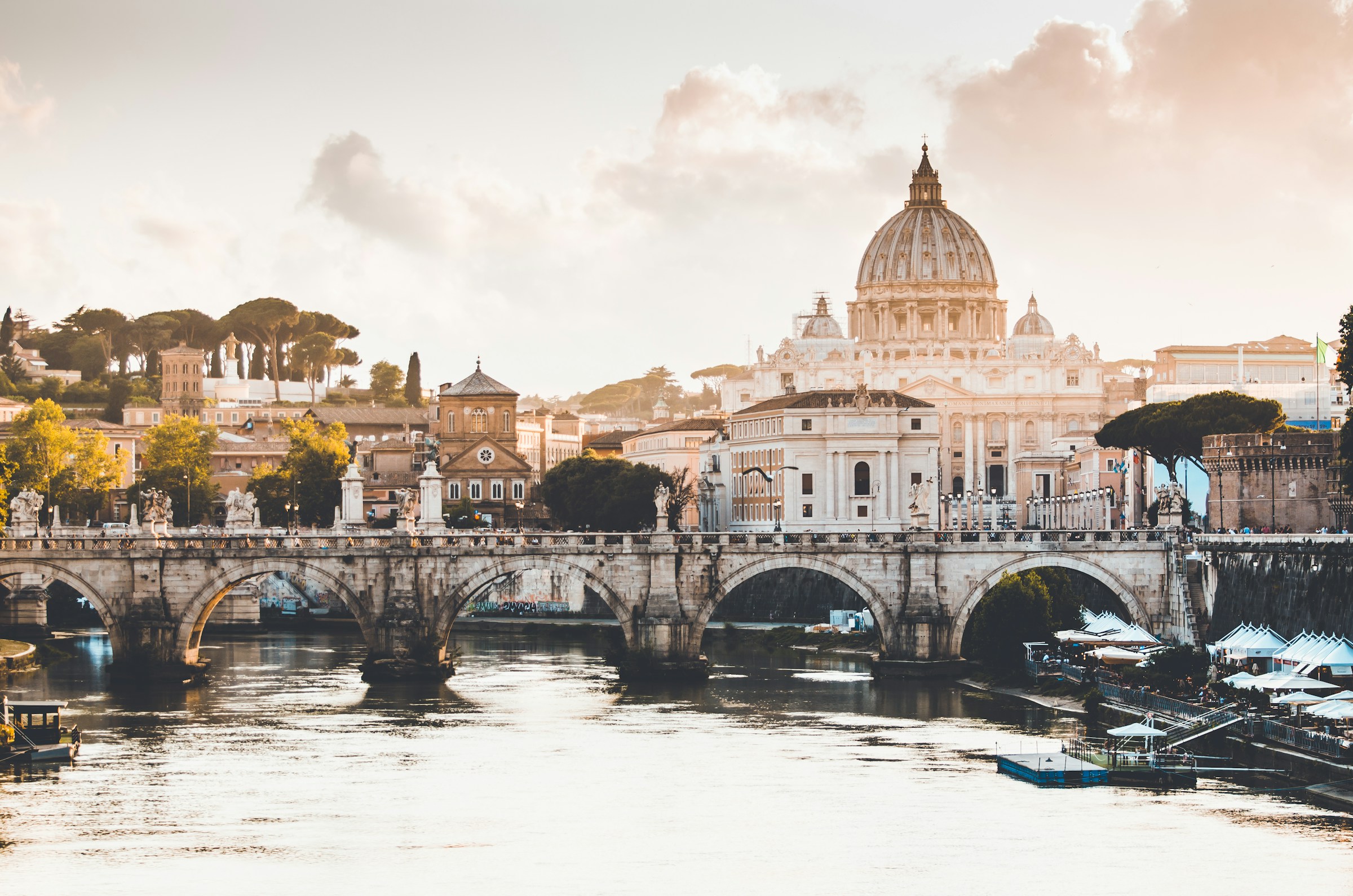
Food is a source of nutrition and pleasure, but it is also a commercial enterprise with a long, storied history, and Rome is where that history runs deepest. The day opens in the ancient produce and cattle markets near the Tiber, then moves to the base of the Capitoline Hill, where animal sacrifice tied religion to economy in ways that shaped the city for centuries. At the Circus Maximus, we examine how food was used as a tool of political control, feeding and managing a population as much as nourishing it.
The afternoon belongs to Testaccio. Few neighborhoods in Rome compress so much history into so small a space: ancient ruins of the imperial port economy give way to the more recent archaeology of the slaughterhouse district, and together they tell the story of how Rome has fed itself, regulated its food supply, and dealt with its own waste across two millennia. The day ends with a private visit to Monte Testaccio, a 35-meter hill built entirely from discarded amphorae and closed to the public, followed by a curated dinner at a neighborhood trattoria.
THE ENTREPRENEURIAL THREAD
Rome's ancient food economy was built on logistics, standardization, and scale. The amphorae that built Monte Testaccio were a supply chain technology. The markets near the Tiber were a distribution network. The questions Rome asked about moving goods, managing costs, and feeding millions are the same questions your business asks every day.